
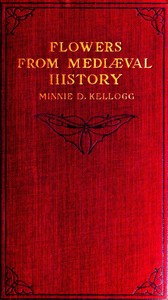
Flowers from Mediæval History by Minnie D. Kellogg
Forget the knights in shining armor for a second. Minnie D. Kellogg's Flowers from Mediæval History is about the dirt under their fingernails, the songs they sang, and the bizarre things they believed could cure a headache. This isn't a straight-line narrative of empires rising and falling. Instead, Kellogg gathers a bouquet of short chapters, each one focusing on a specific slice of life, a curious law, a popular legend, or a personal account from the Middle Ages.
The Story
There isn't one plot. Think of it as a series of vivid snapshots. One chapter might explain the complex rules of medieval guilds for bakers, while the next shares a haunting ghost story that people genuinely feared. She talks about what gardens meant to people, how they treated animals, the surprising rights some women had in trade, and the utterly strange medical remedies prescribed by doctors. Kellogg pulls from chronicles, letters, legal documents, and poems to build these portraits. The 'story' is the collective human experience of an era, told through its fragments and oddities.
Why You Should Read It
I loved this book because it makes history feel immediate. Reading about a law that fined people for throwing garbage out their window in 1300s London suddenly connects you to a person who lived there. You realize they had the same daily frustrations! Kellogg has a keen eye for the details that spark imagination. Her writing isn't dry or academic; it's like listening to a knowledgeable friend point out the most interesting bits in a museum. She shows how superstition, faith, commerce, and survival were all tangled together in ways that challenge our modern assumptions.
Final Verdict
This is the perfect book for anyone who finds standard history textbooks a bit dull. It's for the curious reader who enjoys podcasts or articles about the strange side of the past. If you're a writer looking for authentic medieval flavor for a story, a teacher wanting engaging anecdotes for students, or just someone who likes to know how people really lived, you'll find treasure here. It's a charming, accessible gateway into a world that was far more complex and interesting than just castles and crusades.
Legal analysis indicates this work is in the public domain. Thank you for supporting open literature.
Sarah Harris
2 years agoAfter hearing about this author multiple times, the content flows smoothly from one chapter to the next. Highly recommended.
Ethan King
1 year agoI have to admit, the content flows smoothly from one chapter to the next. I learned so much from this.


Amanda Johnson
5 months agoThe layout is very easy on the eyes.